Company Rules: A Consent-Led Framework for Group Live-Cam Viewing in UK Households
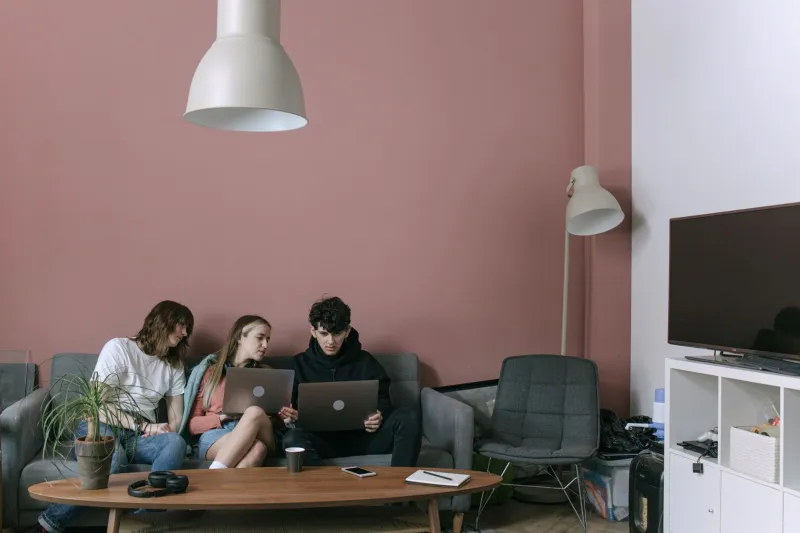
Live-cam viewing is often imagined as a solitary activity, yet plenty of UK viewers watch in company: a friend on the sofa, a housemate drifting through the living room, a small group gathered after dinner. The social pleasure is obvious. The risk is equally clear. A performer's boundaries are set for an individual interaction, not for an audience that has arrived with its own momentum. When several people share one screen, consent has to be actively protected rather than assumed.
Agree the room before you enter it
The most useful conversation happens before anyone opens a laptop or casts a screen. A short, plain-spoken agreement between friends is not bureaucratic; it is the difference between a relaxed evening and a situation that nobody quite knows how to stop.
Start with who is present. Everyone should be an adult and should have completed any age-assurance steps required by the platform in their own right. A shared device does not create a shared age. Nor does one person's verified account turn the room into a verified space. If someone has wandered in, or is likely to wander in, decide now whether the session should wait.
Next, agree what kind of viewing is acceptable to the group. Some friends are comfortable with the same rooms; others are not. Nobody should have to justify a lower threshold, and nobody should be teased into raising it. The group's default should be the most cautious person's comfort, not the most enthusiastic person's appetite.
It is also worth naming practical limits. No recording. No screenshots. No forwarding of links into group chats. No bringing in a fifth person mid-session without checking. And an agreed exit phrase, however light-hearted, can be useful: a way for anyone to say 'I am done' without having to explain themselves in front of the screen.
Shared accounts, shared responsibility
Shared screens are common; shared accounts should not be. If one person owns the account, that person remains responsible for its use. Passwords should not circulate among a group, and a logged-in session should not be left open for others to use later. Many platforms offer their own controls for device management and session history; these are worth using, not ignoring.
The account holder should also think about what the group can see. Notifications, profile details and payment prompts may appear on a shared screen. A discreet viewer in a shared home will already know the value of turning off previews and keeping the device close. The same discipline applies when friends are present. Discretion is not only about who might walk in; it is also about what the group is invited to see.
Payment deserves a separate sentence. A tip made from one person's account is not a group permission slip. If the group wants to tip, agree in advance who is paying and how much, and do it once rather than turning the performer's room into a bidding conversation. Generosity is not a substitute for consent, and a shared payment should never be used to pressure a performer into something they have not offered.
The friend who asks for more
Every group has a dynamic, and one common dynamic is the friend who treats the screen as a challenge. They may ask for a private show, request a specific act, or urge the performer to go further than the room's stated limits. Sometimes this is thoughtless rather than malicious. Sometimes it is simply the confidence of being in company. Either way, it creates a problem that the group should not solve by voting.
A performer's boundaries are not a group negotiation. The fact that three people want something does not make it a reasonable request, and the fact that one person is paying does not make it a right. If the friend pushes, the group should pause the session rather than debate the performer's answer in the room. The performer should not have to manage the group's internal disagreement while also managing their own work.
The simplest intervention is often the most effective: 'We agreed we would not ask for that.' It names the group's prior agreement rather than the performer's refusal. It does not require anyone to be accused of anything. If the friend continues, the account holder can close the room. A session is not a courtroom, and the group does not need unanimous agreement to stop.
Intervening without turning the room into a debate
Intervening well is a skill, and it is easier when the group has already agreed that stopping is allowed. Keep the language neutral. Avoid shaming the friend in front of the performer, but do not soften the boundary into a suggestion. 'I am not comfortable with this' is a complete sentence. 'Let's stop here' does not require a seconder.
If a performer withdraws consent mid-session, the group should treat that as final and immediate. There is no need to ask why, no benefit in negotiating, and no place for a group discussion about whether the withdrawal was serious. The account holder should close the room or leave the private session. The friend who wants to stay can be told, plainly, that the session is over.
Afterwards, the group should check in. Not as a tribunal, but as friends. Did anyone feel pressured? Did anyone feel unable to speak? Was there a moment when the mood shifted and nobody named it? A brief conversation after the screen is closed is far better than letting a small discomfort harden into a group norm.
The group check-out
Ending well matters as much as beginning well. The group should leave the room as it would leave any social space: without recording, without forwarding links, and without turning a performer's work into a story for a wider group. If someone crossed a line, say so privately and soon. If the group's agreement needs revising, revise it before the next session rather than in the middle of one.
Group viewing can be enjoyable, sociable and entirely compatible with consent-first etiquette. It requires only that the group treats consent as something shared but not collectively owned. The performer's boundaries remain theirs. The account holder's responsibilities remain theirs. And any viewer's better judgement remains valid, even when everyone else on the sofa is urging otherwise. In a UK live-cam room, as in any social space, the company you keep should make consent clearer, not quieter.