Buying Time, Not Compliance: A UK Viewer’s Guide to Payment and Consent in Live-Cam Rooms
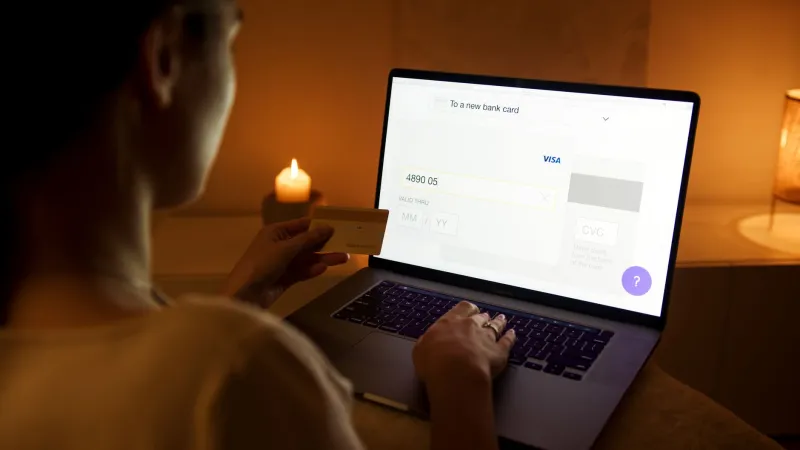
Live-cam platforms rest on a straightforward commercial exchange: viewers pay for access, features and a performer’s time. That exchange is real, and it should be treated with clarity. It is not, however, a blank cheque. At KembleCam, the editorial position is consent first, and that principle applies just as firmly when money has changed hands. A token or tip may open a private room, place a request in a queue or support a performer’s work. It does not convert a performer’s body, boundaries or attention into purchasable compliance.
What payment can reasonably secure
In practical terms, payment on a UK live-cam platform usually buys platform-defined features: entry to a private show, a set number of minutes, a tip menu item, a message or a request to be considered. These are commercial products. They are governed by the platform’s terms, the performer’s stated limits and the consent practices of the room. A viewer is entitled to understand what a feature includes before paying. A performer is entitled to decline anything that falls outside their limits, even if a viewer has spent money in the room.
Clarity at the point of payment matters. If a private session is advertised as twenty minutes of conversation, that is the reasonable expectation. If a tip menu lists a specific request, the performer’s willingness to fulfil it remains conditional on their consent at the time. A menu is an invitation to ask, not a guarantee that every request will be accepted. Platforms vary, so viewers should read the relevant terms rather than assume that a payment alone settles the question.
What payment does not authorise
Money does not buy a specific act, a particular response or a performer’s undivided attention beyond the agreed format. It does not override a limit stated in a profile, a room rule or a live reply. It does not create a right to pressure, negotiate repeatedly or punish a refusal by withdrawing a tip after the fact. Nor does it transform a performer into an employee who must follow instructions. In UK live-cam viewing, the performer is an independent adult making a contemporaneous decision about what they will do.
This distinction is easy to blur in the moment. A viewer may feel that a tip has created a reasonable expectation. A performer may experience the same payment as support for their time, not as a commission for a scripted act. The safest interpretation is the one that preserves consent: payment buys the opportunity to ask within the platform’s format; it does not buy the answer.
Scripts for asking without applying pressure
Clear asking is a skill, and it can be practised. A useful sequence is to state the request, acknowledge the performer’s discretion and offer an easy exit. For example: 'I would like to request X if that is within your limits. If it is not, no problem at all — I will not ask again tonight.' This makes the request legible without making refusal costly.
Another approach is to check the format before paying: 'Before I book a private session, could you confirm whether X is something you offer? I understand if it is not.' If the answer is no, the appropriate reply is brief: 'Thanks for being clear. I will leave it there.' A viewer who continues to explain, bargain or hint has stopped asking and started applying pressure.
Scripts should also cover the awkward middle ground. If a performer pauses or gives a conditional answer, do not treat hesitation as a yes. Try: 'That sounds like a maybe, so let us leave it. I am happy to continue with the conversation as it is.' This gives the performer room to withdraw without having to manage the viewer’s disappointment.
Reframing entitlement when a request is declined
Refusal can feel personal, but it is not a verdict on the viewer’s worth. It is a statement about what the performer will do in that moment. A useful reframe is to separate the transaction from the relationship: the payment has purchased a format, not a person. The viewer can still enjoy the room, tip fairly for what was offered and choose a different performer whose stated limits align with their interests.
Entitlement often hides in small phrases: 'But I paid for this', 'You owe me an explanation' or 'I will just take my money elsewhere.' The last may be true as a commercial choice, but it should not be used as a threat. A neutral alternative is: 'I understand. That is not what I was hoping for, but I respect your answer.' If the mismatch is significant, the viewer can leave politely and look for a room that advertises the experience they want.
When payment goes wrong: refunds and chargebacks
Payment frustration is legitimate when a platform feature fails, a session is cut short by a technical fault or a charge appears without authorisation. The correct route is the platform’s support process, not pressure on the performer. Keep records of the transaction, the advertised feature and any relevant messages. Explain the issue factually. Avoid framing a consented-to session as fraud simply because the outcome was not to the viewer’s taste.
Chargebacks deserve particular care. A chargeback is a formal dispute with a bank or card provider, not a review of a performer’s boundaries. Using it because a request was declined, or because a performer ended a session when consent was withdrawn, misrepresents the transaction and can have serious consequences for the performer and the viewer’s account. If a performer withdraws consent mid-session, that is a consent event, not automatically a billing fault. The platform may have its own policy for partial sessions; ask support rather than turning the payment into leverage.
A short checklist for UK viewers
Before paying, read the feature description and the performer’s limits. Ask one clear question rather than a series of hints. Treat a refusal as final for the session. Tip for what was offered, not as a down payment on future compliance. If a dispute arises, use platform support and keep your language factual. And remember that discretion works both ways: a consent-first room is not a place for public score-settling over a declined request.
The commercial and the consensual can coexist. Payment gives structure to the exchange; consent gives it legitimacy. In UK live-cam viewing in 2026, the most reliable viewers are not those who spend the most, but those who understand the difference.