Asking, Not Arranging: Proposing a Private UK Live-Cam Session with Care
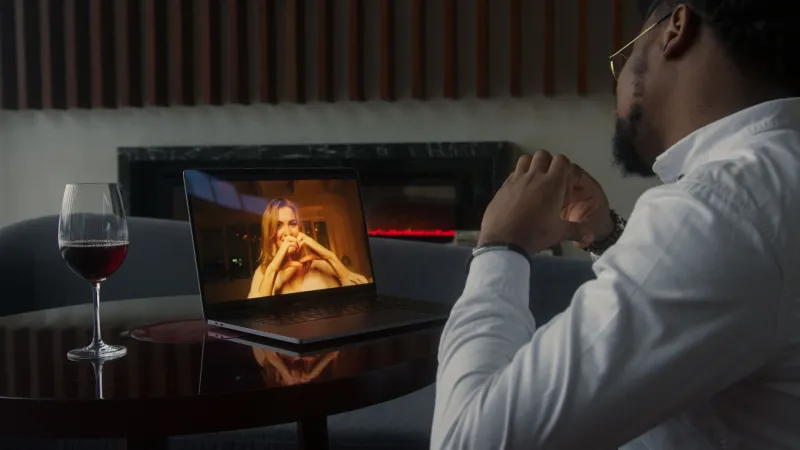
The invitation is the first boundary
A private session is not simply a longer public room. It is a change of context: a different rate, a different duration and a different set of expectations. For that reason, the first act of a private session is not payment or scheduling. It is an invitation. On KembleCam, the consent-first principle applies as much to the request as to the room itself. A viewer who asks acknowledges that the performer has the right to decline, to defer or to set conditions. A viewer who instructs has already skipped that step.
The distinction is easy to hear. An instruction sounds like a transaction completed in advance: 'Private now, twenty minutes, this rate.' An invitation sounds like a question with room for an answer: 'I would be interested in a private session if you offer them. Would you be open to discussing the details another time?' The first treats the performer as a slot to be filled. The second treats them as a person with a schedule, a preference and a veto.
Read the room before you type
Before expressing interest, use the information already available. Check the performer's profile, the pinned notes and the room rules. Many performers state whether they offer private sessions, how requests should be made and what information they need. If the room is busy, emotionally charged or in the middle of a conversation that deserves attention, wait. A private request is not urgent simply because the viewer has felt the impulse.
It also helps to notice what is not being offered. If a performer has said that they are not taking private sessions tonight, that is a complete answer. Repeating the request in public chat, in a direct message or through another viewer is not persistence. It is pressure with extra steps.
A short script for expressing interest
A useful request is brief, conditional and easy to refuse. It might read:
'Hello. I saw that you sometimes offer private sessions. If that is still the case, I would be interested in discussing one. There is no pressure and no need to reply tonight if you are busy. If private sessions are not something you offer, please ignore this message and accept my apologies for the interruption.'
This script does several things. It shows that the viewer has read the profile. It avoids a demand for an immediate answer. It gives the performer an explicit route to decline. It also avoids the most common mistake in private-session requests: treating a 'maybe later' as a booking. A performer who says 'not tonight' has not agreed to tomorrow. They have declined for tonight.
Clarify the terms before the room changes
If the performer is open to a private session, agree the terms before anything changes. The checklist is not romantic, but it is consent-first. Confirm the duration and the start and end time in UK time. Confirm the rate and the payment method through the platform. Confirm what is included and what is not. Confirm whether recording is permitted; in most cases it should not be assumed. Confirm what happens if the connection fails or if either party needs to stop. Confirm how the session will be kept discreet.
This is also the moment to be honest about your own limits. If you have a budget, say so before the room changes. If you have a hard stop at a particular time, say so. If you are unsure about a request, ask rather than assume. A private session that begins with unclear terms is not more spontaneous. It is simply more likely to end in misunderstanding.
When the answer is no, or not tonight
A refusal is not a challenge to be overcome with a better offer. It is information. The appropriate response is brief and final: 'Thank you for considering it. I hope you enjoy the rest of your evening.' Do not ask why. Do not offer more money. Do not suggest that you will wait in the room. Do not return under another name.
The same applies to 'not tonight'. It may sound softer, but it is still a boundary. The respectful viewer treats it as a closed door for the evening and does not send a follow-up message asking whether the answer has changed. If the performer later invites requests, they will do so in their own time.
After the request
If the session goes ahead, keep the discretion that the platform promises. Do not screenshot the private room. Do not repeat details in public chat. Do not treat the performer's time as a topic for other viewers. If the session does not go ahead, return to the public room as though nothing has happened. The absence of a private session is not a grievance to be aired.
Asking rather than instructing is not a formality. It is the difference between a viewer who wants a service and a viewer who recognises a person providing it. In a consent-first space, that difference is the whole point.